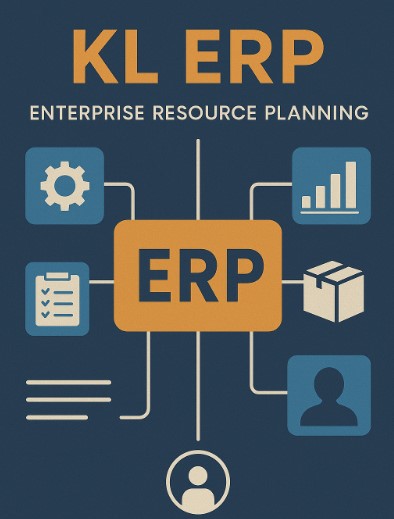
KL ERP: The Future of Unified Business Intelligence
In an era where data drives every strategic decision, organizations are under immense pressure to transform raw information into actionable intelligence. Fragmented systems, siloed data, and delayed reporting often prevent leaders from seeing the full picture of their business. This is where KL ERP emerges as a transformative force—redefining how enterprises integrate operations, analyze performance, and unlock the true potential of unified business intelligence.
KL ERP is not merely another enterprise resource planning system. It represents a forward-looking approach to digital management, where operational efficiency, real-time analytics, and strategic insight converge into a single intelligent ecosystem. As businesses navigate increasingly complex markets, KL ERP stands at the forefront of the next generation of enterprise intelligence.

Understanding KL ERP in the Modern Enterprise Landscape
At its core, KL ERP is designed to unify disparate business functions—finance, human resources, supply chain, sales, manufacturing, and customer management—into one centralized platform. Traditional ERP systems often focus on transactional efficiency, ensuring that processes run smoothly. KL ERP goes further by embedding advanced analytics, artificial intelligence, and real-time data processing directly into operational workflows.
This integration transforms ERP from a back-office tool into a strategic command center. Executives no longer need to wait for weekly or monthly reports. Instead, they gain continuous visibility into performance metrics, trends, and risks as they unfold.
In a digital-first economy, speed and accuracy are decisive advantages. KL ERP provides both by aligning data consistency with intelligent analysis, enabling faster, more confident decision-making.
The Shift from Data Management to Business Intelligence
Historically, business intelligence (BI) tools operated separately from ERP systems. Data was extracted, transformed, and loaded into external dashboards—a process that introduced delays, inconsistencies, and security risks. KL ERP challenges this outdated model by embedding BI capabilities directly into the ERP framework.
This shift delivers several critical benefits:
- Real-time insights: Data is analyzed at the moment it is generated.
- Single source of truth: All departments rely on the same validated data.
- Context-aware analytics: Insights are tied directly to business processes.
- Reduced complexity: No need for multiple disconnected platforms.
By merging ERP and BI into a unified environment, KL ERP eliminates the gap between operations and strategy.
Core Features That Define KL ERP
1. Unified Data Architecture
KL ERP is built on a centralized data model that ensures consistency across all modules. Whether a transaction originates in procurement, sales, or finance, it is instantly reflected throughout the system. This architecture prevents duplication, reduces errors, and ensures that analytics are always based on accurate information.
2. Real-Time Analytics and Dashboards
Instead of static reports, KL ERP provides dynamic dashboards tailored to different roles within the organization. A CFO can monitor cash flow and profitability in real time, while an operations manager can track inventory levels and production efficiency. These dashboards update automatically, empowering users with immediate insights.
3. AI-Driven Predictive Intelligence
One of the most powerful aspects of KL ERP is its use of artificial intelligence and machine learning. By analyzing historical and real-time data, the system can:
- Forecast demand and sales trends
- Identify potential supply chain disruptions
- Predict cash flow challenges
- Detect anomalies and potential fraud
This predictive capability transforms decision-making from reactive to proactive.
4. Seamless Integration and Scalability
KL ERP is designed to integrate smoothly with third-party applications, cloud services, and legacy systems. Its modular architecture allows organizations to start with essential functions and scale over time, making it suitable for both growing enterprises and large multinational corporations.
KL ERP and the Evolution of Business Decision-Making
Decision-making has evolved from intuition-based judgments to data-driven strategies. KL ERP accelerates this evolution by embedding intelligence into everyday processes. For example:
- Sales teams can adjust pricing strategies based on real-time market demand.
- Supply chain managers can reroute logistics before delays escalate.
- Finance leaders can model multiple scenarios to assess financial resilience.
This continuous feedback loop between data and action fosters agility, enabling organizations to respond swiftly to market changes.
Enhancing Cross-Department Collaboration
Silos are one of the greatest obstacles to organizational efficiency. When departments operate on separate systems, collaboration suffers. KL ERP breaks down these silos by providing a shared platform where data flows freely across functions.
For instance, when sales forecasts increase, procurement and production teams are instantly informed. Finance can assess the impact on cash flow, while HR can plan workforce requirements. This synchronized approach ensures alignment across the organization, reducing friction and improving overall performance.
Security, Compliance, and Data Governance
As data becomes more valuable, it also becomes more vulnerable. KL ERP addresses this challenge through robust security and governance frameworks. Key features include:
- Role-based access controls
- End-to-end data encryption
- Automated compliance reporting
- Audit trails for regulatory accountability
By embedding security at the system level, KL ERP ensures that sensitive business intelligence is protected without compromising accessibility for authorized users.
Industry-Specific Intelligence with KL ERP
One of the defining strengths of KL ERP is its adaptability across industries. While the core platform remains consistent, industry-specific modules and analytics provide tailored insights:
- Manufacturing: Production optimization, predictive maintenance, and quality control analytics
- Retail: Customer behavior analysis, inventory optimization, and demand forecasting
- Healthcare: Resource utilization, compliance tracking, and patient flow optimization
- Logistics: Route optimization, cost analysis, and delivery performance monitoring
This flexibility allows organizations to extract maximum value from their data within their unique operational contexts.
The Role of Cloud and Mobility in KL ERP
Modern enterprises operate beyond traditional office environments. KL ERP embraces this reality through cloud-native architecture and mobile accessibility. Users can access dashboards, approve workflows, and monitor performance from anywhere in the world.
Cloud deployment also ensures:
- Faster implementation
- Lower infrastructure costs
- Automatic updates and scalability
- Improved disaster recovery and resilience
By combining cloud technology with unified intelligence, KL ERP supports the needs of a globally connected workforce.
Driving Digital Transformation with KL ERP
Digital transformation is not just about adopting new technology—it is about rethinking how an organization operates. KL ERP serves as a catalyst for this transformation by aligning people, processes, and data around a common intelligence framework.
Organizations that implement KL ERP often experience:
- Improved operational efficiency
- Greater transparency and accountability
- Enhanced customer satisfaction
- Stronger strategic alignment
These outcomes are not achieved overnight, but KL ERP provides the foundation for continuous improvement and innovation.
The Future of Unified Business Intelligence
As artificial intelligence, big data, and automation continue to evolve, the line between operational systems and strategic intelligence will disappear entirely. KL ERP represents this future—a system where insight is not an afterthought, but an integral part of every transaction and decision.
Looking ahead, we can expect KL ERP platforms to incorporate even more advanced capabilities, such as:
- Autonomous process optimization
- Natural language analytics
- Advanced scenario modeling
- Deeper integration with external data sources
In this future, businesses will not simply react to change—they will anticipate it.
Conclusion
KL ERP stands as a powerful vision of what enterprise systems can become when unified data and business intelligence work in harmony. By integrating real-time analytics, AI-driven insights, and cross-functional collaboration into a single platform, KL ERP empowers organizations to navigate complexity with clarity and confidence.
In a world where data is abundant but insight is scarce, KL ERP transforms information into intelligence and intelligence into action. For enterprises seeking to remain competitive, agile, and future-ready, KL ERP is not just an option—it is the future of unified business intelligence.