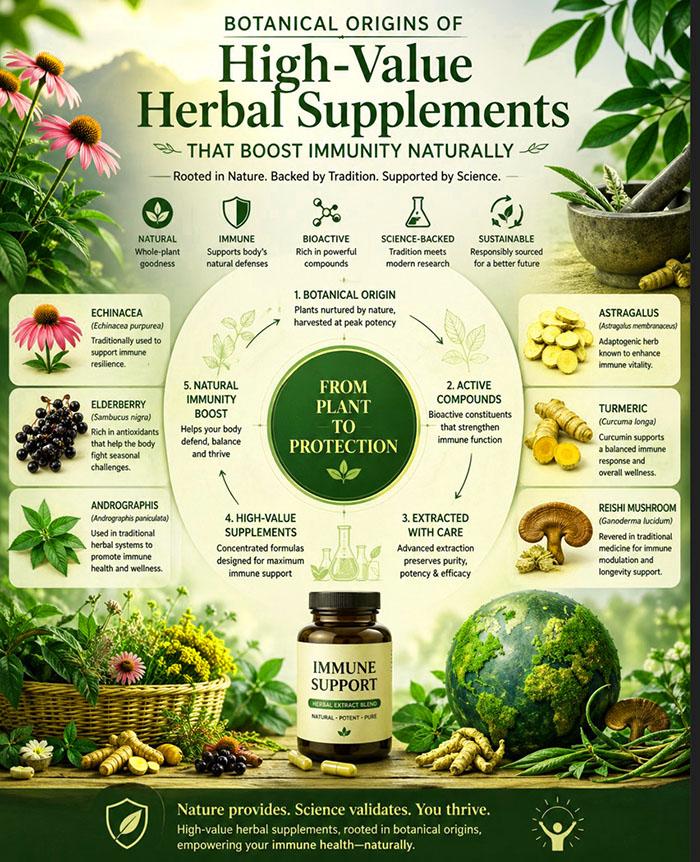
Botanical Origins of High-Value Herbal Supplements That Boost Immunity Naturally
In a world increasingly focused on preventive health, herbal supplements have emerged as powerful allies in strengthening the immune system. While modern medicine plays a critical role in treating illness, many people are turning back to nature to enhance resilience against disease. The botanical origins of high-value herbal supplements reveal a fascinating intersection of traditional wisdom, ecological diversity, and modern scientific validation.
Understanding where these herbs come from—and why they are so effective—can help consumers make informed decisions and appreciate the deeper value behind these natural remedies.
The Power of Plants in Immune Support
Plants have evolved complex chemical defense systems to survive environmental stress, pests, and pathogens. These bioactive compounds—such as alkaloids, flavonoids, terpenoids, and polysaccharides—are precisely what make many herbs beneficial for human immunity.
When consumed, these compounds can:
- Stimulate immune cell activity
- Reduce inflammation
- Combat oxidative stress
- Enhance the body’s natural defense mechanisms
The most valuable herbal supplements often originate from regions with rich biodiversity, where plants have adapted to extreme conditions, resulting in higher concentrations of protective compounds.
Ancient Roots: Traditional Medicine Systems
Many high-value immune-boosting herbs have been used for centuries in traditional medicine systems such as Ayurveda, Traditional Chinese Medicine (TCM), and indigenous healing practices.
Ayurveda (India)
Ayurvedic medicine emphasizes balance within the body and often uses herbs like:
- Ashwagandha (Withania somnifera): Known for reducing stress and improving immune resilience
- Tulsi (Holy Basil): Revered for its antimicrobial and anti-inflammatory properties
Traditional Chinese Medicine (China)
TCM focuses on restoring energy flow (Qi) and strengthening vital organs:
- Astragalus root: Enhances immune function and supports respiratory health
- Ginseng: Boosts energy and improves resistance to illness
Indigenous Knowledge (Global)
Local communities around the world have long relied on native plants:
- Echinacea (North America): Widely used to prevent colds and infections
- Cat’s Claw (Amazon rainforest): Known for immune-modulating effects
These traditions laid the foundation for today’s herbal supplement industry, which now combines ancient knowledge with scientific research.
Key Botanical Sources of High-Value Herbal Supplements
Let’s explore some of the most sought-after herbs and their botanical origins.
1. Elderberry (Sambucus nigra)
Origin: Europe and North America
Elderberry has gained global popularity due to its potent antiviral properties. Rich in anthocyanins, it helps reduce the severity and duration of colds and flu. Its dark purple berries are harvested from shrubs that thrive in temperate climates.
2. Turmeric (Curcuma longa)
Origin: South Asia, especially India
Turmeric contains curcumin, a powerful anti-inflammatory and antioxidant compound. Its use dates back thousands of years in Ayurvedic medicine. Modern supplements often enhance curcumin’s bioavailability with black pepper extract.
3. Reishi Mushroom (Ganoderma lucidum)
Origin: East Asia
Often called the “mushroom of immortality,” reishi has been used in TCM for centuries. It contains beta-glucans that support immune regulation and help the body adapt to stress.
4. Andrographis (Andrographis paniculata)
Origin: South and Southeast Asia
This bitter herb is known for its strong antiviral and immune-stimulating properties. It is commonly used to relieve symptoms of respiratory infections.
5. Moringa (Moringa oleifera)
Origin: India and Africa
Moringa leaves are nutrient-dense and packed with vitamins, minerals, and antioxidants. It supports overall immune health and helps combat oxidative stress.
Why Botanical Origin Matters
Not all herbal supplements are created equal. The geographical origin of a plant significantly affects its potency and quality.
Soil Composition
Mineral-rich soil enhances the nutrient profile of plants. Herbs grown in depleted soil may lack essential compounds.
Climate Conditions
Plants exposed to environmental stress—such as high altitude, intense sunlight, or limited water—often produce more protective phytochemicals.
Harvesting Practices
Timing and method of harvest influence the concentration of active ingredients. For example, some roots are most potent when harvested after a specific growth period.
Processing Techniques
Gentle drying and extraction methods preserve bioactive compounds, while poor processing can degrade them.
The Role of Sustainability and Ethical Sourcing
As demand for herbal supplements grows, sustainability has become a critical concern. Overharvesting and habitat destruction threaten many medicinal plants.
High-value brands now emphasize:
- Wildcrafting with ecological balance
- Organic cultivation
- Fair trade partnerships with local farmers
- Traceability from farm to product
Sustainable sourcing not only protects the environment but also ensures long-term availability of these valuable herbs.
Scientific Validation Meets Traditional Wisdom
Modern research continues to validate the immune-boosting properties of many traditional herbs.
For example:
- Studies show elderberry can inhibit viral replication
- Curcumin has been widely researched for its anti-inflammatory effects
- Beta-glucans from medicinal mushrooms are recognized for immune modulation
This convergence of science and tradition enhances credibility and encourages wider adoption of herbal supplements.
Choosing High-Quality Herbal Supplements
With the growing popularity of natural health products, the market is flooded with options. To ensure effectiveness, consumers should look for:
Standardized Extracts
These guarantee a consistent level of active compounds.
Third-Party Testing
Independent lab verification ensures purity and safety.
Transparent Labeling
Clear information about origin, ingredients, and dosage is essential.
Reputable Brands
Companies with a history of quality and ethical sourcing are more trustworthy.
The Future of Botanical Immunity
The future of herbal supplements lies in innovation and integration. Advances in biotechnology and phytochemistry are enabling more precise extraction methods and enhanced formulations.
Emerging trends include:
- Personalized herbal supplements based on genetic profiles
- Synergistic blends combining multiple النباتات for greater effectiveness
- Increased use of adaptogens to support stress-related immunity
As consumers become more health-conscious, the demand for natural, plant-based solutions will continue to rise.
Conclusion
The botanical origins of high-value herbal supplements offer more than just a story—they provide insight into the power of nature to support human health. From ancient healing traditions to modern scientific research, these plants have proven their ability to strengthen the immune system naturally.
By understanding where these herbs come from, how they are grown, and why they work, we can make smarter choices and fully appreciate the value they bring to our well-being.
Nature has always been a source of healing. Today, as we rediscover its potential, herbal supplements stand as a bridge between the past and the future of health—rooted in tradition, yet evolving with science.