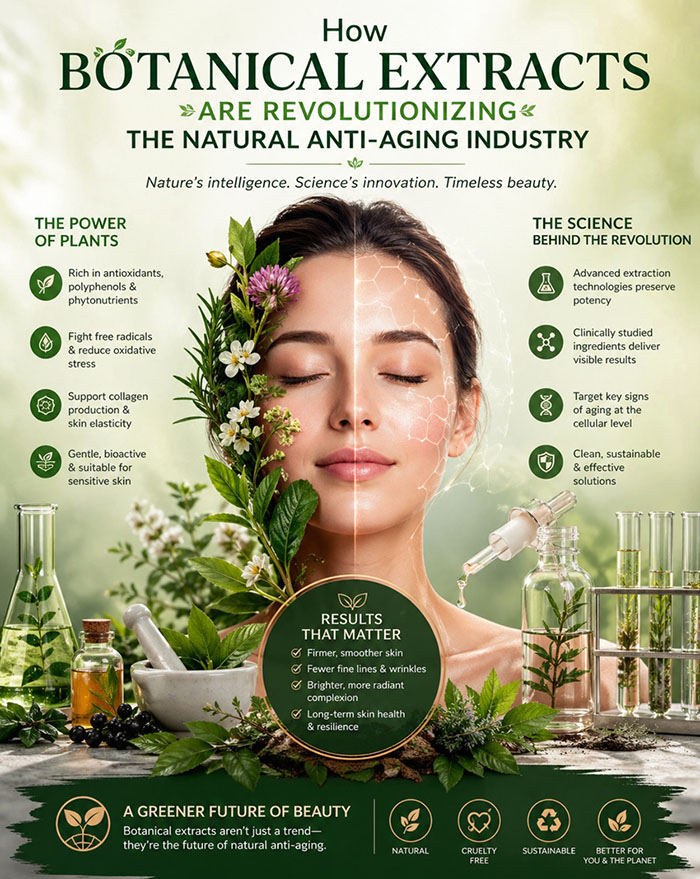
How Botanical Extracts Are Revolutionizing the Natural Anti-Aging Industry
The global beauty industry is undergoing a major transformation as consumers increasingly seek safer, cleaner, and more sustainable skincare solutions. One of the most significant developments in recent years is the growing popularity of botanical extracts in anti-aging products. Derived from plants, flowers, herbs, roots, and fruits, these natural ingredients are reshaping the way people approach skincare and age management. Rather than relying heavily on synthetic chemicals, modern consumers are embracing botanical science for its ability to nourish the skin naturally while delivering impressive anti-aging benefits.
Botanical extracts are no longer viewed as simple herbal alternatives. Advances in cosmetic research and biotechnology have elevated plant-based compounds into highly effective skincare ingredients capable of targeting wrinkles, fine lines, loss of elasticity, dullness, and environmental damage. As a result, botanical extracts are revolutionizing the natural anti-aging industry in ways that combine traditional wisdom with modern scientific innovation.
The Rising Demand for Natural Anti-Aging Solutions
Consumers today are more informed about skincare ingredients than ever before. Many people carefully read product labels and actively avoid harsh chemicals such as parabens, sulfates, and artificial fragrances. This shift has created strong demand for natural and organic beauty products that prioritize skin health and environmental sustainability.
The anti-aging sector has especially benefited from this movement. Aging skin is often sensitive and vulnerable to irritation, making gentle plant-derived ingredients highly attractive. Botanical extracts provide antioxidants, vitamins, minerals, and bioactive compounds that help support skin regeneration without the aggressive side effects associated with some synthetic treatments.
Another factor driving this trend is the growing popularity of holistic wellness. Consumers increasingly view skincare as part of overall health rather than simply a cosmetic routine. Botanical ingredients align perfectly with this philosophy because they are associated with purity, wellness, and harmony with nature.
Understanding Botanical Extracts
Botanical extracts are concentrated substances obtained from plants using methods such as cold pressing, steam distillation, infusion, or solvent extraction. These extracts preserve beneficial plant compounds that can improve skin health and appearance.
Different plants contain unique phytochemicals that provide specific skincare benefits. Some are rich in antioxidants, while others promote hydration, collagen production, or skin barrier repair. Common active compounds found in botanical extracts include:
- Polyphenols
- Flavonoids
- Carotenoids
- Essential fatty acids
- Vitamins A, C, and E
- Amino acids
- Natural enzymes
These compounds work together to combat the visible signs of aging while supporting long-term skin vitality.
Powerful Antioxidant Protection
One of the primary reasons botanical extracts are so valuable in anti-aging skincare is their high antioxidant content. Free radicals generated by pollution, UV radiation, stress, and poor diet accelerate skin aging by damaging collagen and skin cells. Antioxidants neutralize these free radicals before they can cause significant harm.
Green tea extract, for example, is rich in catechins that help protect the skin from oxidative stress. Pomegranate extract contains punicalagins and ellagic acid, which support skin repair and elasticity. Grape seed extract is packed with proanthocyanidins that help strengthen collagen fibers and improve skin firmness.
By reducing oxidative damage, botanical antioxidants can minimize wrinkles, prevent sagging, and maintain a youthful complexion.
Natural Collagen Support
Collagen is the structural protein responsible for keeping skin firm, smooth, and elastic. As people age, collagen production naturally declines, leading to wrinkles and loss of skin volume. Many botanical extracts stimulate collagen synthesis naturally, making them powerful anti-aging allies.
Centella asiatica, often called gotu kola, is one of the most celebrated botanical ingredients for collagen support. It contains compounds known as triterpenoids that promote skin healing and improve elasticity. Rosehip extract is another collagen-supportive ingredient because it contains natural vitamin C, which plays a critical role in collagen formation.
Bakuchiol, derived from the babchi plant, has gained attention as a natural alternative to retinol. It helps stimulate collagen production and improve skin texture while causing less irritation than traditional retinoids. This makes it especially suitable for sensitive skin types.
Deep Hydration and Moisture Retention
Hydration is essential for maintaining youthful-looking skin. Dry skin tends to emphasize wrinkles, roughness, and dullness. Botanical extracts help improve moisture retention while strengthening the skin barrier.
Aloe vera remains one of the most widely used botanical ingredients because of its soothing and hydrating properties. Rich in polysaccharides and vitamins, aloe helps replenish moisture while calming irritation. Cucumber extract also provides hydration and cooling benefits that refresh tired skin.
Plant oils such as argan oil, jojoba oil, and avocado oil contain essential fatty acids that nourish the skin deeply. These oils mimic the skin’s natural lipids, helping prevent moisture loss and maintaining softness and flexibility.
Anti-Inflammatory Benefits for Sensitive Aging Skin
Inflammation plays a major role in premature aging. Chronic irritation can damage collagen, weaken the skin barrier, and accelerate wrinkle formation. Botanical extracts are highly valued for their natural anti-inflammatory properties.
Chamomile extract contains bisabolol and apigenin, which help calm redness and irritation. Calendula extract supports skin healing and reduces sensitivity. Licorice root extract is widely used to soothe inflammation while brightening uneven skin tone.
Because many consumers have sensitive or reactive skin, gentle botanical formulations are becoming increasingly popular alternatives to harsh chemical treatments.
Brightening and Skin Tone Improvement
Uneven pigmentation, dark spots, and dullness are common concerns associated with aging skin. Botanical extracts can naturally brighten the complexion and improve overall skin tone.
Turmeric extract contains curcumin, a compound known for its antioxidant and brightening effects. Bearberry extract is rich in arbutin, which helps reduce hyperpigmentation. Mulberry root extract can also inhibit melanin production, leading to a more radiant appearance.
These plant-derived brighteners offer a more natural approach to achieving luminous skin without relying heavily on synthetic bleaching agents.
Biotechnology and the Evolution of Botanical Skincare
Modern cosmetic science has transformed botanical skincare from traditional herbal remedies into sophisticated, evidence-based formulations. Researchers now use advanced extraction technologies to isolate the most potent plant compounds while improving stability and absorption.
Biotechnology allows scientists to enhance the effectiveness of botanical ingredients through fermentation and bioengineering. Fermented botanical extracts often have smaller molecular structures that penetrate the skin more effectively. This innovation increases the potency of natural skincare products without compromising their gentle nature.
Additionally, sustainable cultivation practices and eco-friendly extraction methods are helping brands meet growing consumer expectations for ethical beauty products.
Sustainability and Eco-Conscious Beauty
Environmental awareness is another major reason botanical extracts are dominating the anti-aging market. Consumers increasingly prefer products that are cruelty-free, biodegradable, and sustainably sourced.
Plant-based ingredients generally have a smaller environmental footprint compared to some synthetic alternatives. Many skincare brands are now investing in organic farming, recyclable packaging, and transparent sourcing practices to appeal to environmentally conscious consumers.
This focus on sustainability strengthens the connection between botanical skincare and modern lifestyle values. Consumers no longer want products that simply improve appearance; they also want products that align with ethical and environmental principles.
Challenges and Considerations
Despite their many advantages, botanical extracts are not without challenges. Natural ingredients can vary in potency depending on climate, soil conditions, and extraction methods. Maintaining consistency across batches requires strict quality control and scientific standardization.
Some botanical ingredients may also cause allergic reactions in certain individuals. Essential oils, for example, can irritate sensitive skin when used improperly. This highlights the importance of proper formulation and dermatological testing.
Consumers should also be cautious of misleading marketing claims. Not all products labeled “natural” contain meaningful concentrations of active botanical ingredients. Choosing reputable brands with transparent ingredient lists is essential for achieving real anti-aging benefits.
The Future of Botanical Anti-Aging
The future of anti-aging skincare is increasingly plant-powered. As scientific research continues to validate the effectiveness of botanical compounds, more consumers are likely to transition toward natural skincare solutions.
Emerging innovations include personalized botanical skincare, AI-assisted ingredient analysis, and microbiome-friendly plant formulations designed to support the skin’s natural ecosystem. Researchers are also exploring rare medicinal plants from around the world for new anti-aging applications.
The combination of traditional botanical knowledge and cutting-edge science is creating a new generation of skincare products that prioritize both efficacy and wellness.
Conclusion
Botanical extracts are transforming the natural anti-aging industry by offering powerful, science-backed alternatives to synthetic skincare ingredients. From antioxidant protection and collagen support to hydration and inflammation control, plant-derived compounds provide comprehensive solutions for aging skin.
Consumers are increasingly drawn to botanical skincare because it combines effectiveness, gentleness, and sustainability. As biotechnology and cosmetic research continue to advance, botanical extracts will likely play an even greater role in shaping the future of anti-aging innovation.
The rise of plant-based beauty represents more than just a trend. It reflects a broader movement toward healthier lifestyles, environmental responsibility, and a deeper appreciation for nature’s ability to support long-term skin health and youthful vitality.