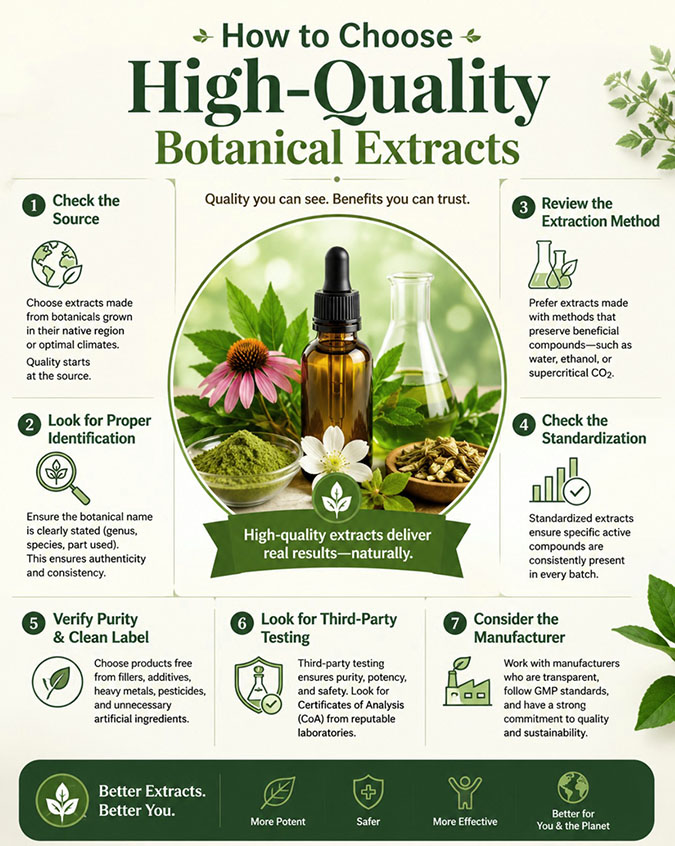
How to Choose High-Quality Botanical Extracts for Maximum Health Benefits
In recent years, botanical extracts have become increasingly popular among health-conscious consumers seeking natural ways to support wellness, energy, immunity, digestion, and cognitive performance. From turmeric and ashwagandha to green tea and elderberry, plant-based extracts are now widely available in capsules, powders, tinctures, teas, and functional foods. However, not all botanical extracts are created equal. The quality, purity, sourcing, and extraction methods can vary dramatically between products, affecting both safety and effectiveness.
Choosing high-quality botanical extracts requires more than reading a label or trusting marketing claims. Understanding how botanical extracts are produced and evaluated can help consumers make smarter decisions and maximize potential health benefits.
Understanding Botanical Extracts
Botanical extracts are concentrated substances derived from plants, including roots, leaves, flowers, seeds, bark, and fruits. Manufacturers use extraction processes to isolate beneficial compounds such as antioxidants, flavonoids, alkaloids, terpenes, and polyphenols.
Unlike raw herbs, extracts contain concentrated active ingredients, often making them more potent and convenient. For example, a turmeric extract standardized to curcumin may provide significantly higher levels of beneficial compounds than ordinary turmeric powder.
The effectiveness of an extract depends on several important factors:
- Plant quality
- Growing conditions
- Harvest timing
- Extraction method
- Standardization
- Storage and packaging
- Manufacturing practices
Understanding these elements can help consumers identify superior products in a crowded marketplace.
Look for Standardized Extracts
One of the most important indicators of quality is standardization. A standardized extract contains a guaranteed percentage of specific active compounds associated with health benefits.
For example:
- Turmeric extracts may be standardized to 95% curcuminoids
- Green tea extracts may contain a defined percentage of EGCG
- Ginkgo biloba extracts may specify flavone glycosides and terpene lactones
- Ashwagandha extracts may list withanolide content
Standardization helps ensure consistency from batch to batch. Without it, potency can vary widely, making it difficult to know how much active ingredient you are actually consuming.
Consumers should carefully read supplement labels to identify the standardized compound and its percentage. Products that fail to provide this information may offer inconsistent quality or weaker concentrations.
Evaluate the Source of the Plant Material
The origin of botanical ingredients matters more than many people realize. Environmental conditions, soil quality, climate, and farming practices all influence the chemical composition of medicinal plants.
High-quality brands often disclose where their herbs are grown and harvested. Plants cultivated in nutrient-rich soil under optimal conditions generally contain higher levels of beneficial compounds.
Organic cultivation can also reduce exposure to pesticides, herbicides, and synthetic fertilizers. While organic certification does not automatically guarantee superior potency, it can help minimize contamination risks.
Wildcrafted herbs may also provide advantages when harvested responsibly. However, sustainable sourcing practices are essential to protect ecosystems and prevent overharvesting.
Consumers should prioritize companies that are transparent about sourcing and committed to ethical, environmentally responsible practices.
Understand Different Extraction Methods
Extraction methods play a major role in determining purity, potency, and bioavailability. Different compounds require different solvents and techniques to preserve their beneficial properties.
Common extraction methods include:
Water Extraction
Water extraction is commonly used for teas and mushrooms. It effectively isolates water-soluble compounds such as polysaccharides and certain antioxidants. However, it may not capture fat-soluble compounds effectively.
Alcohol Extraction
Alcohol extraction is widely used for tinctures and herbal concentrates. It can extract a broad range of active compounds and often preserves plant constituents effectively.
CO2 Extraction
Supercritical CO2 extraction is considered one of the cleanest and most advanced methods. It uses carbon dioxide under pressure to isolate compounds without leaving harmful solvent residues. This technique is often used for delicate plant compounds and essential oils.
Solvent Extraction
Some manufacturers use chemical solvents such as hexane or acetone. While effective in some cases, poorly executed solvent extraction may leave unwanted residues in the final product.
High-quality manufacturers usually disclose their extraction methods and conduct testing to ensure purity and safety.
Check for Third-Party Testing
Independent laboratory testing is essential for verifying product quality. Reputable companies often use third-party testing to confirm:
- Potency
- Purity
- Identity
- Microbial safety
- Heavy metal levels
- Pesticide residues
- Solvent residues
Third-party verification provides an extra layer of trust because testing is conducted by independent laboratories rather than the manufacturer alone.
Look for certifications or testing seals from respected organizations. Some companies also publish Certificates of Analysis (COAs) that show detailed laboratory results for each batch.
Transparency is a strong sign of a trustworthy supplement brand.
Avoid Products with Unnecessary Fillers
Some low-quality supplements contain excessive fillers, artificial additives, preservatives, sweeteners, or synthetic coloring agents. These ingredients may dilute potency or introduce unnecessary chemicals into the product.
When reading labels, pay attention to inactive ingredients. Ideally, botanical extracts should contain minimal additives beyond the necessary capsule material or stabilizers.
Watch for:
- Artificial dyes
- Hydrogenated oils
- Excessive binders
- Synthetic flavorings
- Unnecessary sugars
Cleaner formulas often indicate greater attention to quality and purity.
Consider Bioavailability
Even a potent botanical extract may provide limited benefits if the body cannot absorb it effectively. Bioavailability refers to how efficiently active compounds are absorbed and utilized.
Some botanical compounds naturally have low absorption rates. For example, curcumin from turmeric is poorly absorbed unless combined with bioenhancers such as black pepper extract (piperine) or delivered through specialized formulations.
High-quality manufacturers often use advanced delivery systems to improve absorption, including:
- Liposomal technology
- Fermented extracts
- Phytosome complexes
- Nanoemulsions
- Delayed-release capsules
Understanding bioavailability can help consumers choose products that deliver measurable results rather than simply high ingredient numbers.
Research the Brand Reputation
Brand reputation can reveal a great deal about product quality. Established companies with strong quality-control systems are generally more reliable than unknown brands with limited transparency.
Before purchasing, consider researching:
- Customer reviews
- Manufacturing standards
- Company history
- Scientific research
- Industry certifications
- Recall history
Look for manufacturers that follow Good Manufacturing Practices (GMP) and invest in scientific validation.
Brands that collaborate with researchers, conduct clinical studies, or publish educational resources often demonstrate a stronger commitment to quality and consumer safety.
Beware of Unrealistic Health Claims
Botanical extracts can support wellness, but no supplement should promise miraculous cures or instant results. Be cautious of products claiming to:
- Cure serious diseases
- Deliver immediate transformation
- Replace medical treatment entirely
- Work identically for everyone
Responsible companies use balanced, science-based language and acknowledge that results may vary between individuals.
Consumers should approach exaggerated marketing claims with skepticism, especially when products lack supporting evidence or transparency.
Pay Attention to Packaging and Storage
Botanical extracts are sensitive to light, heat, moisture, and oxygen. Poor storage conditions can degrade active compounds and reduce effectiveness over time.
High-quality products often use:
- Dark glass bottles
- Airtight containers
- Moisture-resistant packaging
- Clearly labeled expiration dates
Consumers should also store supplements properly at home according to label instructions.
Avoid purchasing products with damaged seals, faded labels, or unclear expiration dates.
Understand Your Personal Health Needs
Not every botanical extract is suitable for every individual. Age, health conditions, medications, allergies, and lifestyle factors all influence how botanical supplements affect the body.
For example:
- Stimulatory herbs may not suit individuals with anxiety
- Blood-thinning herbs may interact with medications
- Adaptogens may affect hormone balance
- Certain extracts may trigger allergies
Consulting a qualified healthcare professional is especially important for individuals who are pregnant, nursing, taking prescription medications, or managing chronic conditions.
Personalized guidance can help ensure safe and effective supplement use.
The Importance of Scientific Evidence
Traditional herbal use provides valuable historical knowledge, but modern scientific research adds another layer of credibility. High-quality botanical extracts are increasingly supported by clinical studies evaluating safety, dosage, and efficacy.
Consumers should look for products backed by peer-reviewed research whenever possible. Scientific validation helps distinguish evidence-based supplements from trendy products with little support.
Companies that invest in clinical research often prioritize product consistency and quality control because reliable studies require standardized formulations.
Final Thoughts
Choosing high-quality botanical extracts involves careful evaluation of sourcing, extraction methods, standardization, purity, testing, and brand integrity. While the supplement market offers many promising natural products, consumers must remain informed and selective to achieve the best results.
A premium botanical extract should provide transparency, scientific support, clean ingredients, and verified potency. By learning how to assess these factors, consumers can avoid inferior products and make more confident decisions about their health and wellness routines.
As interest in natural health continues to grow, education becomes one of the most powerful tools for maximizing the benefits of botanical supplements. Investing time in researching products today can lead to safer choices, better outcomes, and greater long-term wellness tomorrow.