The Rise of Botanical CBD Alternatives in the Global Wellness Market
The global wellness industry has experienced remarkable growth over the past decade, fueled by increasing consumer interest in natural remedies, plant-based products, and holistic health practices. Among the most significant trends has been the rise of cannabidiol (CBD), a hemp-derived compound widely marketed for relaxation, stress relief, and general wellness support. However, as the CBD market matures, a new movement is emerging: botanical CBD alternatives. These plant-derived compounds and herbal formulations are reshaping the wellness landscape by offering consumers natural options that deliver calming, restorative, and mood-enhancing benefits without relying on cannabis-derived ingredients.
Botanical CBD alternatives are rapidly gaining popularity due to changing regulations, consumer preferences, and growing awareness of traditional herbal medicine. From adaptogenic herbs to terpene-rich botanicals, these alternatives are becoming central players in the global wellness market.
Understanding Botanical CBD Alternatives
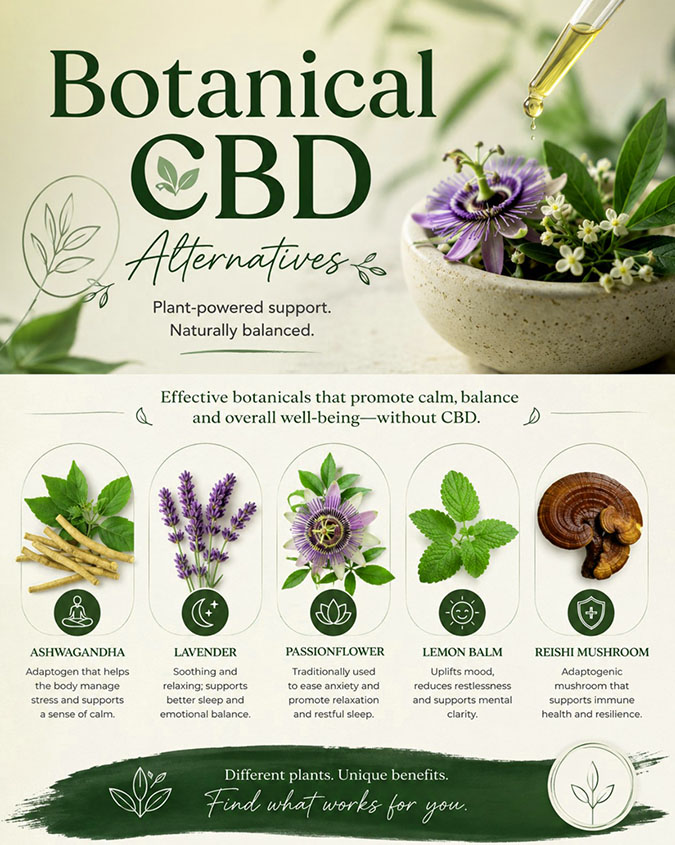
Botanical CBD alternatives refer to plant-based compounds and herbal extracts designed to mimic or complement the relaxing and balancing effects associated with CBD. Unlike CBD, which is extracted primarily from hemp plants, these alternatives come from a diverse range of botanicals traditionally used in herbal medicine systems around the world.
Common botanical alternatives include:
- Ashwagandha
- Rhodiola rosea
- Chamomile
- Lavender
- Lemon balm
- Passionflower
- Kava
- Holy basil
- Valerian root
- Terpenes from various aromatic plants
These ingredients are often incorporated into oils, gummies, beverages, capsules, skincare products, and functional foods. Many manufacturers market them as natural stress-support supplements, sleep aids, or mood-balancing solutions.
The appeal lies in their ability to support wellness goals without the legal uncertainty or stigma sometimes associated with hemp-derived CBD products.
Why Consumers Are Seeking Alternatives to CBD
Several factors are driving consumers toward botanical CBD alternatives.
Regulatory Uncertainty
CBD regulations vary dramatically between countries and even regions within countries. In some markets, CBD remains heavily restricted or subject to changing legal frameworks. This uncertainty has encouraged both consumers and companies to seek alternatives that can be marketed more freely across international borders.
Botanical ingredients such as chamomile or ashwagandha generally face fewer legal complications, making them attractive to wellness brands looking for global scalability.
Desire for Non-Cannabis Wellness Solutions
Not every consumer feels comfortable using cannabis-derived products. Some individuals avoid CBD due to cultural perceptions, workplace drug testing concerns, or personal preferences. Botanical alternatives offer a familiar and approachable option for people seeking natural wellness support without any association with cannabis.
Increased Interest in Traditional Herbal Medicine
Consumers are becoming more educated about ancient wellness systems such as Ayurveda, Traditional Chinese Medicine, and herbalism. This has sparked renewed interest in herbs and adaptogens used for centuries to promote balance, resilience, and calmness.
Modern wellness brands are blending these traditional ingredients with contemporary product formats, creating appealing solutions for younger health-conscious consumers.
The Role of Adaptogens in the Wellness Market
Adaptogens have become one of the fastest-growing categories within botanical wellness. These herbs are believed to help the body adapt to physical, emotional, and environmental stressors.
Popular adaptogens include:
- Ashwagandha for stress reduction
- Rhodiola for mental performance
- Ginseng for energy support
- Holy basil for emotional balance
- Cordyceps mushrooms for stamina
Unlike synthetic stimulants or sedatives, adaptogens are often marketed as balancing agents that support the body’s natural resilience.
The rise of adaptogenic beverages, powders, and supplements reflects broader consumer demand for functional wellness products that integrate seamlessly into daily routines. Coffee alternatives infused with mushrooms and herbs, for example, have become highly popular among wellness-focused consumers looking to reduce caffeine dependency.
Terpenes: The Emerging Star of Botanical Wellness
Another important trend in botanical CBD alternatives is the growing interest in terpenes. Terpenes are aromatic compounds naturally found in plants, including citrus fruits, lavender, pine trees, and herbs. They contribute to plant fragrance and may also influence mood and relaxation.
Some companies are now creating terpene blends designed to replicate the calming effects commonly associated with CBD. For example:
- Linalool from lavender may support relaxation
- Limonene from citrus may promote mood elevation
- Beta-caryophyllene from black pepper may support stress management
These terpene-based formulations are increasingly used in aromatherapy products, wellness beverages, topical creams, and vape alternatives.
The scientific exploration of terpenes remains ongoing, but consumer curiosity and market innovation continue to fuel rapid growth.
Functional Beverages and Edibles Driving Demand
The wellness beverage sector has become one of the most dynamic segments for botanical CBD alternatives. Consumers are seeking convenient and enjoyable ways to incorporate wellness ingredients into everyday life.
Popular products include:
- Adaptogenic sparkling waters
- Herbal teas
- Relaxation drinks
- Functional mocktails
- Botanical gummies
- Plant-based snack bars
These products often combine multiple ingredients such as magnesium, herbal extracts, amino acids, and terpenes to create comprehensive wellness experiences.
Younger consumers, particularly Millennials and Generation Z, are highly receptive to these innovations. Many prioritize preventive wellness and are willing to experiment with natural products that support sleep, focus, and emotional well-being.
Social media has also played a major role in accelerating awareness of botanical wellness trends. Influencers, wellness coaches, and lifestyle creators frequently showcase herbal products as part of self-care routines, contributing to mainstream acceptance.
The Beauty and Skincare Connection
Botanical CBD alternatives are also influencing the beauty and skincare industry. Consumers increasingly seek clean-label, plant-based skincare products formulated with calming and antioxidant-rich ingredients.
Ingredients such as lavender, chamomile, green tea, calendula, and centella asiatica are being incorporated into:
- Serums
- Moisturizers
- Facial masks
- Bath products
- Massage oils
- Aromatherapy blends
These products are often marketed as promoting relaxation, reducing skin irritation, and supporting overall skin wellness.
The clean beauty movement aligns naturally with botanical wellness trends. Consumers want transparency, sustainability, and naturally derived ingredients that fit holistic lifestyle values.
Scientific Research and Consumer Trust
One challenge facing the botanical wellness industry is the need for stronger scientific validation. While many herbs have long histories of traditional use, clinical evidence for specific health claims can vary significantly.
Consumers today are increasingly skeptical of exaggerated wellness marketing. They expect transparency regarding sourcing, ingredient quality, and research-backed formulations.
As competition intensifies, companies investing in scientific studies and third-party testing are likely to gain consumer trust. Brands that communicate responsibly and avoid unsupported medical claims may establish stronger long-term credibility.
Researchers are also exploring how combinations of botanicals may create synergistic effects, opening new opportunities for innovation in stress support, cognitive wellness, and sleep health.
Sustainability and Ethical Sourcing
Sustainability has become a major consideration within the global wellness market. Ethical sourcing, eco-friendly packaging, and regenerative agriculture practices are increasingly influencing purchasing decisions.
Consumers are paying closer attention to where herbs are grown, how they are harvested, and whether farming practices support biodiversity and local communities.
Many botanical wellness companies now emphasize:
- Organic cultivation
- Fair-trade sourcing
- Carbon-conscious production
- Plastic-free packaging
- Regenerative farming partnerships
This focus on sustainability strengthens the emotional connection between brands and environmentally conscious consumers.
Global Market Outlook
The future of botanical CBD alternatives appears highly promising. The wellness industry continues to expand globally, and demand for natural stress-management solutions is expected to remain strong.
Several trends are likely to shape the market’s future:
- Personalized wellness formulations
- AI-driven supplement recommendations
- Increased clinical research
- Expansion of functional foods
- Growth in alcohol-free social beverages
- Greater integration of traditional herbal medicine into mainstream healthcare
Asia-Pacific, North America, and Europe are expected to remain key growth regions, although emerging markets may also experience increased adoption as wellness awareness expands worldwide.
The convergence of science, tradition, and consumer lifestyle preferences is creating a fertile environment for innovation. Botanical alternatives are no longer niche products; they are becoming central components of the modern wellness economy.
Conclusion
The rise of botanical CBD alternatives represents a significant evolution within the global wellness market. As consumers seek natural, accessible, and holistic approaches to health, plant-based ingredients are stepping into the spotlight as powerful wellness tools.
From adaptogens and terpenes to herbal beverages and clean beauty products, botanical alternatives are reshaping how people manage stress, relaxation, and emotional balance. Their appeal lies not only in their functional potential but also in their connection to sustainability, tradition, and mindful living.
As research advances and consumer demand continues to grow, botanical wellness products are poised to become an enduring force in the future of global health and self-care.