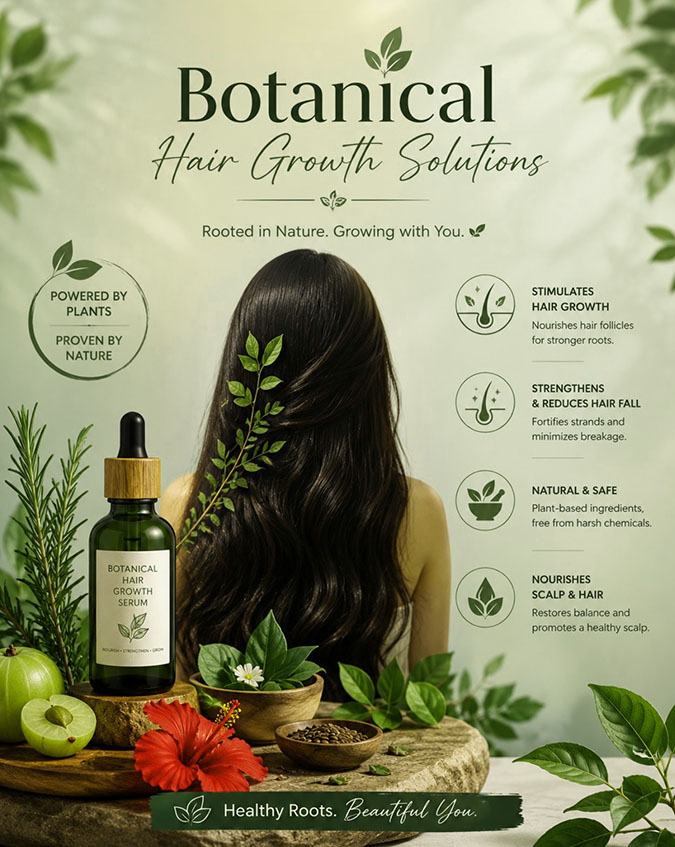
Botanical Hair Growth Solutions: Natural Treatments Backed by Clinical Studies
Hair loss affects millions of people worldwide, regardless of age or gender. While genetics, hormones, stress, nutritional deficiencies, and environmental factors all contribute to thinning hair, many individuals are turning toward botanical remedies as safer and more sustainable alternatives to synthetic treatments. Over the last decade, scientific research has increasingly explored plant-based ingredients for their potential to stimulate hair follicles, reduce inflammation, and improve scalp health.
Unlike traditional chemical treatments that may cause irritation or unwanted side effects, botanical hair growth solutions often contain naturally occurring antioxidants, vitamins, fatty acids, and anti-inflammatory compounds that support healthy hair cycles. Several herbs and plant extracts have now been evaluated in clinical studies, showing promising results in promoting thicker, healthier hair.
This article explores the most effective botanical hair growth solutions supported by scientific evidence and explains how these natural treatments work.
Understanding Hair Growth and Hair Loss
To understand how botanical treatments help, it is important to first understand the hair growth cycle. Hair follicles go through three major phases:
- Anagen Phase – the active growth stage
- Catagen Phase – the transitional stage
- Telogen Phase – the resting and shedding stage
Hair loss occurs when follicles prematurely enter the telogen phase or when inflammation and hormonal imbalances damage the follicles over time.
Common causes of hair loss include:
- Androgenetic alopecia (pattern baldness)
- Stress-related shedding
- Nutritional deficiencies
- Hormonal changes
- Poor scalp circulation
- Autoimmune conditions
- Excessive heat and chemical treatments
Botanical treatments often target several of these factors simultaneously by improving blood circulation, reducing oxidative stress, balancing scalp microbiota, and nourishing follicles.
Rosemary Oil: The Most Studied Herbal Hair Growth Remedy
Among natural treatments, rosemary oil has gained significant scientific attention. Derived from the herb rosemary (Rosmarinus officinalis), this essential oil contains compounds that improve circulation and reduce inflammation around hair follicles.
A widely cited clinical study compared rosemary oil to minoxidil 2%, a common pharmaceutical hair loss treatment. After six months, participants using rosemary oil experienced hair count improvements comparable to those using minoxidil, with fewer reports of scalp itching and irritation.
Researchers believe rosemary oil works by:
- Enhancing blood flow to hair follicles
- Reducing inflammation
- Preventing follicle miniaturization
- Providing antioxidant protection
How to Use Rosemary Oil
Rosemary oil should always be diluted with a carrier oil such as coconut or jojoba oil. A few drops massaged into the scalp several times per week may help support hair growth over time.
Consistency is important because botanical treatments generally produce gradual results rather than overnight changes.
Peppermint Oil and Follicle Stimulation
Peppermint oil has also demonstrated impressive hair growth potential in laboratory studies. The menthol content creates a cooling sensation that increases blood circulation in the scalp.
In one animal study, peppermint oil promoted faster and thicker hair growth compared to saline solution and even minoxidil. Researchers observed increased follicle depth and improved dermal thickness.
The benefits of peppermint oil may include:
- Improved oxygen delivery to follicles
- Increased nutrient absorption
- Reduced scalp dryness
- Enhanced follicle activity
Because peppermint oil is highly concentrated, it must also be diluted before application.
Saw Palmetto and DHT Reduction
One of the leading causes of androgenetic alopecia is dihydrotestosterone (DHT), a hormone linked to follicle shrinkage. Saw palmetto, a botanical extract derived from the berries of Serenoa repens, has shown potential as a natural DHT blocker.
Several clinical studies suggest saw palmetto supplementation may improve hair density and reduce shedding, particularly in men with pattern baldness.
Researchers believe saw palmetto works by inhibiting the enzyme 5-alpha-reductase, which converts testosterone into DHT.
Benefits of Saw Palmetto
- May reduce hormone-related hair loss
- Supports thicker hair strands
- Can improve scalp health
- Often associated with fewer side effects than synthetic DHT blockers
Saw palmetto is available in capsules, topical serums, and shampoos.
Aloe Vera for Scalp Health
Healthy hair begins with a healthy scalp. Aloe vera has long been used in traditional medicine for skin healing, hydration, and inflammation reduction.
The gel inside aloe leaves contains:
- Vitamins A, C, and E
- Amino acids
- Enzymes
- Zinc
- Anti-inflammatory compounds
Although clinical studies specifically focused on hair growth are limited, aloe vera has demonstrated strong potential for improving scalp conditions associated with hair thinning, such as dandruff and irritation.
Aloe vera may help by:
- Soothing scalp inflammation
- Reducing excess oil buildup
- Supporting collagen production
- Improving moisture balance
A healthier scalp environment can contribute to stronger follicle performance over time.
Ginseng and Hair Follicle Activation
Ginseng is another botanical ingredient backed by emerging scientific research. Widely used in traditional Asian medicine, ginseng contains active compounds called ginsenosides that may stimulate hair follicle cells.
Studies suggest ginseng may:
- Extend the anagen growth phase
- Prevent follicle apoptosis (cell death)
- Improve circulation
- Support scalp immunity
Some researchers believe ginseng could help counteract stress-related hair loss due to its adaptogenic properties.
Topical ginseng extracts and oral supplements are both commonly used for hair support.
Pumpkin Seed Oil and Hair Density
Pumpkin seed oil has become increasingly popular as a natural remedy for androgenetic alopecia. Rich in phytosterols, fatty acids, zinc, and antioxidants, pumpkin seed oil may support follicle health and hormone balance.
In a randomized clinical trial, men taking pumpkin seed oil supplements experienced a significant increase in hair count after several months compared to the placebo group.
Potential mechanisms include:
- DHT suppression
- Anti-inflammatory activity
- Nutritional support for follicles
- Antioxidant protection
Pumpkin seed oil can be consumed orally or applied topically to the scalp.
Green Tea Extract and Antioxidant Protection
Green tea contains epigallocatechin gallate (EGCG), a powerful antioxidant associated with numerous health benefits. Emerging evidence suggests EGCG may help stimulate dermal papilla cells, which play a critical role in hair growth regulation.
Green tea may benefit hair by:
- Reducing oxidative stress
- Protecting follicles from damage
- Supporting circulation
- Potentially reducing DHT activity
Oxidative stress contributes significantly to follicle aging and hair thinning, making antioxidant-rich botanicals especially valuable.
Onion Juice: A Surprising Clinical Success
Although unconventional, onion juice has produced surprisingly positive results in certain clinical studies involving alopecia areata, an autoimmune form of hair loss.
Researchers observed improved regrowth in participants who applied onion juice to affected scalp areas over several weeks.
The sulfur compounds in onions may contribute to:
- Increased collagen production
- Improved circulation
- Antimicrobial protection
- Enhanced keratin synthesis
While the strong smell may discourage some users, onion-based scalp products are now available in more refined formulations.
The Importance of Nutrition in Botanical Hair Care
Botanical treatments work best when combined with proper nutrition. Hair follicles are metabolically active structures that require adequate vitamins, minerals, and protein.
Important nutrients for hair growth include:
- Iron
- Zinc
- Vitamin D
- Biotin
- Omega-3 fatty acids
- Protein
Many botanical ingredients naturally contain these nutrients or help improve their absorption and utilization.
A balanced diet rich in fruits, vegetables, nuts, seeds, and healthy fats supports the effectiveness of natural hair growth strategies.
Are Botanical Hair Treatments Safe?
Most botanical treatments are generally well tolerated when used correctly. However, natural does not always mean risk-free.
Possible side effects may include:
- Allergic reactions
- Skin irritation
- Scalp sensitivity
- Essential oil burns from improper dilution
Patch testing before full application is recommended. Individuals with medical conditions or those taking medications should consult healthcare professionals before starting herbal supplements.
Pregnant or breastfeeding women should also seek medical advice before using concentrated botanical extracts.
Combining Botanicals for Better Results
Many modern hair growth products combine multiple botanical ingredients to target hair loss from several angles simultaneously.
For example, a serum may contain:
- Rosemary oil for circulation
- Saw palmetto for DHT reduction
- Aloe vera for hydration
- Peppermint oil for follicle stimulation
- Green tea extract for antioxidant support
This multi-targeted approach may provide more comprehensive benefits than relying on a single ingredient alone.
Consistency remains the key factor. Most natural treatments require at least three to six months of regular use before visible improvements appear.
The Future of Botanical Hair Science
The growing demand for clean beauty and natural wellness products continues to drive research into botanical hair solutions. Scientists are increasingly studying plant-derived compounds for their regenerative potential, anti-inflammatory properties, and ability to support stem cell activity within hair follicles.
Future innovations may include:
- Advanced herbal peptide formulations
- Personalized botanical scalp therapies
- Plant-based stem cell technology
- Microbiome-focused hair treatments
As clinical research expands, botanical remedies are becoming more scientifically validated and widely accepted in dermatology and cosmetic science.
Conclusion
Botanical hair growth solutions are no longer limited to traditional folklore or home remedies. Clinical studies now support the effectiveness of several natural ingredients, including rosemary oil, saw palmetto, peppermint oil, pumpkin seed oil, ginseng, and green tea extract.
These plant-based treatments offer a holistic approach to hair health by nourishing follicles, reducing inflammation, improving scalp circulation, and protecting against oxidative stress. While results may take time, many individuals appreciate the gentler and more sustainable nature of botanical therapies compared to harsher chemical alternatives.
For those seeking healthier hair naturally, combining scientifically supported botanicals with proper nutrition, stress management, and consistent scalp care may provide a powerful foundation for long-term hair growth and scalp wellness.