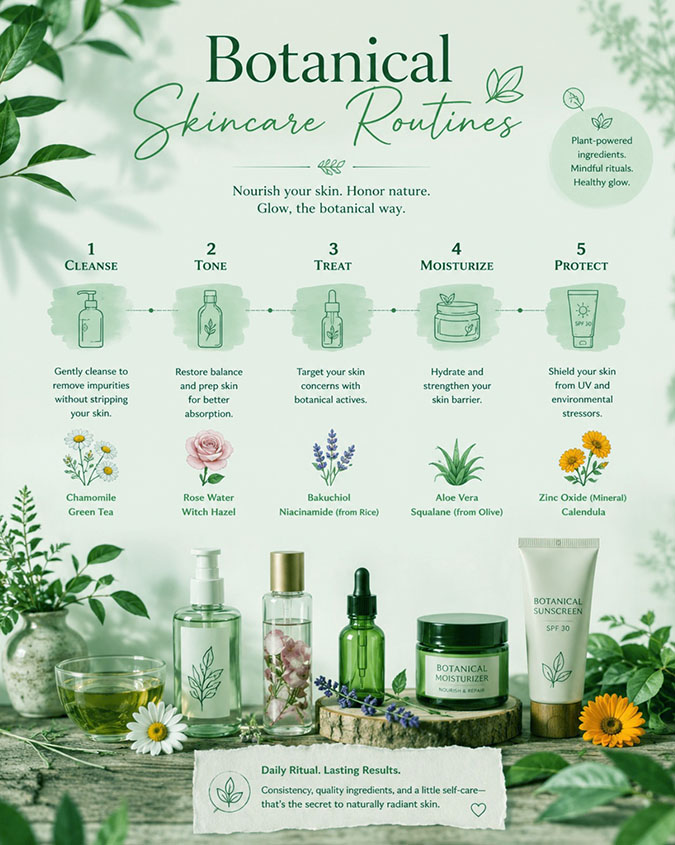
Botanical Skincare Routines That Dermatologists Secretly Recommend
In recent years, botanical skincare has transformed from a niche wellness trend into a scientifically respected approach to healthy skin. Dermatologists are increasingly acknowledging that certain plant-derived ingredients offer powerful benefits for hydration, inflammation control, anti-aging, and skin barrier repair. While many luxury beauty brands market botanical formulas as miracle cures, the real secret lies in how these natural ingredients are used within a consistent skincare routine.
Botanical skincare routines are not about replacing science with nature. Instead, they combine clinically supported plant extracts with dermatological principles to create balanced, effective care for the skin. Many dermatologists quietly recommend specific botanical ingredients because they provide gentle yet powerful results without causing excessive irritation.
This article explores the botanical skincare routines that dermatologists secretly recommend, including the most effective ingredients, morning and evening routines, and how to choose the right plant-based products for your skin type.
Why Dermatologists Support Botanical Skincare
Contrary to popular belief, dermatologists are not automatically skeptical of natural skincare. The concern usually comes from poorly formulated products or unproven marketing claims. However, many plant-based ingredients have extensive scientific support.
Botanical ingredients often contain:
- Antioxidants
- Polyphenols
- Vitamins
- Fatty acids
- Anti-inflammatory compounds
- Natural humectants
These compounds help protect the skin from environmental stress, reduce irritation, and improve moisture retention.
Dermatologists particularly appreciate botanicals that strengthen the skin barrier because a healthy barrier reduces sensitivity, dryness, acne flare-ups, and premature aging.
The Morning Botanical Skincare Routine
A dermatologist-approved botanical morning routine focuses on protection, hydration, and antioxidant defense.
Step 1: Gentle Botanical Cleanser
The first step is cleansing without stripping the skin’s natural oils. Many harsh cleansers damage the skin barrier and increase inflammation.
Dermatologists often recommend botanical cleansers containing:
- Chamomile
- Green tea
- Aloe vera
- Oat extract
- Calendula
These ingredients calm redness while removing dirt and excess oil.
Aloe vera is especially valued for its hydrating and soothing properties. Green tea contains catechins, which help neutralize free radicals caused by pollution and UV exposure.
People with sensitive skin should avoid cleansers containing synthetic fragrance or excessive essential oils, even if labeled “natural.”
Step 2: Antioxidant Botanical Toner or Essence
Botanical toners can provide lightweight hydration while preparing the skin for serums and moisturizers.
Dermatologists often favor ingredients such as:
- Rose water
- Rice extract
- Witch hazel (alcohol-free)
- Centella asiatica
- Cucumber extract
Centella asiatica, also known as cica, has become one of the most dermatologist-recommended botanical ingredients. It supports wound healing, reduces inflammation, and improves skin barrier recovery.
Rice extract is rich in amino acids and minerals that brighten dull skin and improve texture.
Step 3: Botanical Vitamin Serum
One of the best-kept secrets among dermatologists is the use of plant-derived antioxidants combined with traditional active ingredients.
Highly effective botanical serum ingredients include:
- Kakadu plum
- Sea buckthorn
- Licorice root
- Turmeric extract
- Bakuchiol
Kakadu plum contains extremely high levels of vitamin C, making it excellent for brightening and collagen support.
Bakuchiol deserves special attention because it is often called the natural alternative to retinol. Derived from the babchi plant, bakuchiol helps reduce fine lines and improve skin texture without the intense irritation commonly associated with retinoids.
Licorice root is another dermatologist favorite because it helps fade hyperpigmentation and calm redness.
Step 4: Lightweight Botanical Moisturizer
A good moisturizer seals hydration into the skin while supporting the protective barrier.
Dermatologists often recommend botanical moisturizers containing:
- Squalane from olives
- Jojoba oil
- Shea butter
- Ceramides with botanical oils
- Sunflower seed oil
Jojoba oil closely resembles the skin’s natural sebum, making it suitable for both oily and dry skin types.
Sunflower seed oil is rich in linoleic acid, which helps repair the skin barrier and reduce moisture loss.
The key is balance. Dermatologists prefer non-comedogenic botanical oils that hydrate without clogging pores.
Step 5: Mineral Sunscreen with Botanical Protection
No skincare routine is complete without sunscreen. Dermatologists consistently emphasize that UV protection is the single most important anti-aging step.
Botanical sunscreens often include:
- Zinc oxide
- Green tea extract
- Vitamin E
- Red algae
- Sea fennel
Green tea extract helps reduce oxidative stress caused by UV exposure, while mineral filters provide broad-spectrum protection.
Many dermatologists prefer mineral sunscreens for sensitive or acne-prone skin because they are less irritating than some chemical sunscreens.
The Evening Botanical Skincare Routine
Nighttime skincare focuses on repair, recovery, and renewal.
Step 1: Botanical Oil Cleanser
Double cleansing has become a dermatologist-recommended method for removing sunscreen and makeup effectively.
Botanical cleansing oils often include:
- Camellia oil
- Grapeseed oil
- Sweet almond oil
- Evening primrose oil
Camellia oil has been used for centuries in Japanese beauty rituals. It is rich in antioxidants and fatty acids that nourish the skin while dissolving impurities.
Grapeseed oil is lightweight and ideal for oily or acne-prone skin.
Step 2: Botanical Exfoliation
Over-exfoliation is a major skincare mistake. Dermatologists usually recommend gentle exfoliation only two or three times per week.
Plant-based exfoliating ingredients include:
- Fruit enzymes
- Papaya extract
- Pineapple enzymes
- Willow bark extract
Willow bark naturally contains salicin, a precursor to salicylic acid, making it beneficial for acne-prone skin.
Fruit enzymes help dissolve dead skin cells without the harsh abrasion associated with physical scrubs.
Step 3: Repair Serum with Botanical Actives
Nighttime is ideal for concentrated treatments.
Dermatologists often recommend repair-focused botanicals such as:
- Rosehip oil
- Blue tansy
- Centella asiatica
- Hemp seed oil
- Calendula extract
Rosehip oil is rich in essential fatty acids and vitamin A compounds that support skin regeneration.
Blue tansy contains chamazulene, known for calming irritated skin and reducing redness.
Hemp seed oil is lightweight, non-comedogenic, and rich in omega fatty acids that strengthen the skin barrier.
Step 4: Overnight Botanical Moisture Barrier Treatment
At night, the skin naturally loses water. A richer moisturizer or sleeping mask can help maintain hydration.
Dermatologists often recommend overnight products with:
- Oat extract
- Shea butter
- Ceramides
- Honey
- Avocado oil
Oat extract is especially beneficial for eczema-prone or sensitive skin because it reduces itching and inflammation.
Honey acts as a natural humectant that attracts moisture to the skin.
Botanical Ingredients Dermatologists Trust Most
Not every natural ingredient is beneficial. Some plant oils and essential oils can irritate the skin.
Here are the botanical ingredients most frequently supported by dermatological research:
Green Tea
Rich in polyphenols and antioxidants, green tea helps protect against environmental damage and reduces inflammation.
Centella Asiatica
Excellent for repairing the skin barrier and calming sensitive skin.
Aloe Vera
Provides soothing hydration and supports wound healing.
Bakuchiol
A gentler alternative to retinol for anti-aging benefits.
Oat Extract
Highly effective for soothing eczema, dryness, and irritation.
Licorice Root
Reduces redness and hyperpigmentation.
Rosehip Oil
Supports skin regeneration and improves texture.
Common Botanical Skincare Mistakes
Even natural skincare can cause problems when used incorrectly.
Using Too Many Essential Oils
Some essential oils, especially citrus oils, can irritate the skin or increase sun sensitivity.
Assuming Natural Means Safe
Poison ivy is natural too. Dermatologists warn that plant ingredients can still trigger allergies or irritation.
Ignoring Patch Testing
Always patch test new botanical products before applying them to the entire face.
Overloading the Routine
Too many active ingredients may weaken the skin barrier and cause breakouts or sensitivity.
How to Choose Dermatologist-Approved Botanical Products
When shopping for botanical skincare, dermatologists recommend looking for:
- Fragrance-free formulas
- Clinically tested ingredients
- Non-comedogenic labels
- Minimal ingredient lists
- Packaging that protects antioxidants from light and air
Consumers should also avoid products that rely heavily on marketing buzzwords without scientific backing.
A well-formulated botanical product combines natural ingredients with dermatological science rather than replacing science altogether.
Final Thoughts
Botanical skincare routines are no longer just beauty trends. Many dermatologists quietly recommend plant-based ingredients because they offer proven benefits for hydration, anti-aging, barrier repair, and inflammation control.
The secret is not using the most expensive natural product or following complicated social media trends. Instead, effective botanical skincare focuses on consistency, gentle formulations, and scientifically supported ingredients.
When used correctly, botanically enriched skincare can help achieve healthier, calmer, and more resilient skin without excessive irritation. By combining the wisdom of nature with modern dermatology, these routines create a balanced approach that supports long-term skin health naturally and effectively.