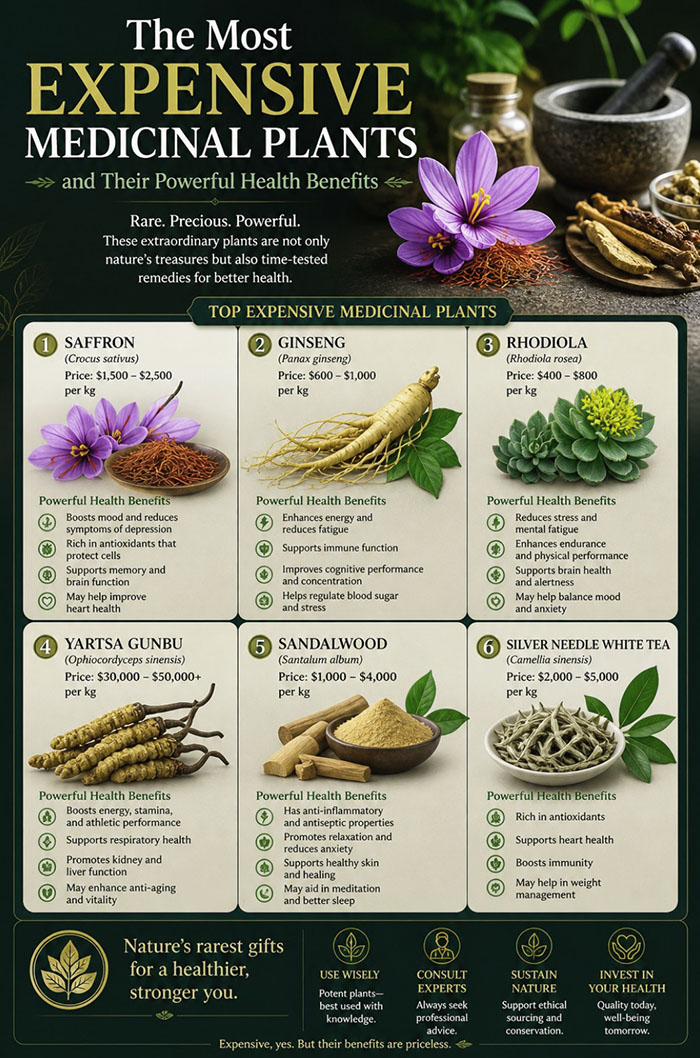
The Most Expensive Medicinal Plants and Their Powerful Health Benefits
For centuries, medicinal plants have played a vital role in human health, offering natural remedies for a wide range of conditions. While many herbs are affordable and widely available, some stand out for their rarity, potency, and astonishing price tags. These plants are often difficult to cultivate, slow to grow, or found only in specific regions, making them both valuable and highly sought after. Beyond their cost, what truly sets them apart is their remarkable healing potential.
This article explores some of the most expensive medicinal plants in the world and uncovers the powerful health benefits that justify their premium value.
1. Saffron (Crocus sativus)
Often referred to as “red gold,” saffron is the most expensive spice and one of the most valuable medicinal plants globally. Harvested from the delicate stigmas of the Crocus sativus flower, it takes approximately 75,000 flowers to produce just one pound of saffron.
Health Benefits:
Saffron is rich in antioxidants such as crocin, safranal, and picrocrocin. These compounds help combat oxidative stress and inflammation. Studies suggest saffron may improve mood and reduce symptoms of depression, making it a natural alternative for mental health support. It also shows promise in enhancing memory and protecting against neurodegenerative diseases like Alzheimer’s.
Additionally, saffron has been linked to improved heart health by lowering blood pressure and cholesterol levels. Its anti-cancer properties are also being studied, particularly its ability to inhibit tumor growth.
2. Ginseng (Panax ginseng)
Ginseng, especially wild varieties, can fetch extremely high prices due to its rarity and long growth cycle. It can take up to 10 years for a root to mature, and older roots are considered more potent and valuable.
Health Benefits:
Ginseng is widely known for its adaptogenic properties, helping the body cope with stress and fatigue. It boosts energy levels, enhances cognitive function, and strengthens the immune system.
One of its most notable benefits is its ability to regulate blood sugar levels, making it beneficial for individuals with diabetes. Ginseng also supports sexual health, improves circulation, and may reduce inflammation.
3. Agarwood (Aquilaria spp.)
Agarwood is one of the rarest and most expensive plant materials in the world. It forms when Aquilaria trees become infected with a specific type of mold, producing a dark, fragrant resin.
Health Benefits:
Traditionally used in herbal medicine, agarwood is valued for its calming and sedative effects. It is commonly used to treat anxiety, insomnia, and digestive issues.
Agarwood also possesses antimicrobial and anti-inflammatory properties, making it useful for treating infections and boosting overall wellness. In some cultures, it is used in spiritual practices to promote mental clarity and emotional balance.
4. Goldenseal (Hydrastis canadensis)
Native to North America, goldenseal is a highly prized medicinal herb known for its bright yellow root. Due to overharvesting and slow growth, it has become increasingly rare and expensive.
Health Benefits:
Goldenseal contains berberine, a powerful compound with antibacterial, antifungal, and anti-inflammatory properties. It is commonly used to treat respiratory infections, digestive disorders, and skin conditions.
Berberine also helps regulate blood sugar and supports cardiovascular health. Goldenseal is often used as a natural immune booster and detoxifying agent.
5. Cordyceps (Cordyceps sinensis)
Cordyceps is a unique medicinal fungus that grows on caterpillars in high-altitude regions, particularly in the Himalayas. Its unusual lifecycle and limited availability make it extremely expensive.
Health Benefits:
Cordyceps is renowned for its ability to enhance energy, stamina, and athletic performance. It increases oxygen utilization and improves respiratory function, making it popular among athletes.
It also supports kidney health, boosts the immune system, and may have anti-aging effects. Some research suggests cordyceps can help regulate blood sugar and improve heart health.
6. Sandalwood (Santalum album)
Sandalwood is a fragrant wood known for its aromatic oil and medicinal properties. High-quality sandalwood, especially from India, is rare and highly valued.
Health Benefits:
Sandalwood oil is widely used in aromatherapy for its calming and grounding effects. It helps reduce stress, anxiety, and insomnia.
Topically, sandalwood has anti-inflammatory and antiseptic properties, making it beneficial for skin conditions such as acne, eczema, and psoriasis. It also promotes wound healing and improves skin texture.
7. Reishi Mushroom (Ganoderma lucidum)
Known as the “mushroom of immortality,” reishi has been used in traditional medicine for thousands of years. High-quality wild reishi can be quite expensive due to its rarity.
Health Benefits:
Reishi is a powerful immune system modulator. It helps the body fight infections and may improve resistance to illness.
It also supports liver health, reduces inflammation, and promotes better sleep. Reishi is often used to manage stress and improve overall well-being. Some studies suggest it may have anti-cancer properties by inhibiting tumor growth and enhancing immune response.
8. Rhodiola (Rhodiola rosea)
Rhodiola is a high-altitude herb found in cold regions of Europe and Asia. Its ability to survive harsh climates contributes to its potency and value.
Health Benefits:
Rhodiola is another adaptogen that helps the body resist physical and emotional stress. It enhances mental performance, reduces fatigue, and improves mood.
It is particularly beneficial for individuals experiencing burnout or chronic stress. Rhodiola may also support heart health and improve endurance.
9. Frankincense (Boswellia sacra)
Frankincense is a resin obtained from Boswellia trees. Historically used in religious ceremonies, it is also a powerful medicinal substance.
Health Benefits:
Frankincense has strong anti-inflammatory properties, making it effective for conditions such as arthritis and inflammatory bowel disease.
It supports respiratory health, improves digestion, and may enhance skin health. Additionally, frankincense is known for its calming effects and is often used in meditation and relaxation practices.
10. Himalayan Yew (Taxus wallichiana)
This rare tree is the natural source of paclitaxel, a compound used in chemotherapy treatments. Due to its medicinal importance and limited supply, it is highly valuable.
Health Benefits:
The primary significance of Himalayan yew lies in its role in cancer treatment. Paclitaxel derived from this plant is used to treat various cancers, including breast, ovarian, and lung cancer.
Beyond its pharmaceutical applications, the plant also has traditional uses in treating respiratory conditions and inflammation.
Why Are These Plants So Expensive?
Several factors contribute to the high cost of these medicinal plants:
- Rarity: Many grow only in specific regions or under unique conditions.
- Slow Growth: Some take years or even decades to mature.
- Labor-Intensive Harvesting: Manual collection increases production costs.
- High Demand: Their proven health benefits drive global demand.
- Sustainability Issues: Overharvesting and environmental changes limit supply.
Final Thoughts
The world of medicinal plants is as fascinating as it is valuable. While their price tags may seem extraordinary, these plants offer powerful health benefits that have been recognized for centuries and are increasingly supported by modern science.
However, it is important to approach their use with care. Not all expensive plants are necessary for good health, and some may interact with medications or cause side effects. Consulting a healthcare professional before using potent herbal remedies is always a wise decision.
Ultimately, these rare and costly medicinal plants remind us of nature’s incredible ability to heal—and the importance of preserving these precious resources for future generations.