The Science Behind Botanical Adaptogens for Stress Relief and Mental Clarity
In today’s fast-paced world, stress has become an unavoidable part of daily life. Long working hours, digital overload, sleep deprivation, and constant mental stimulation place significant pressure on both the body and mind. As people search for natural solutions to support emotional balance and cognitive performance, botanical adaptogens have gained increasing attention. These plant-based substances are celebrated for their potential to help the body adapt to stress, improve resilience, and enhance mental clarity.
But what exactly are adaptogens, and what does science say about their effectiveness? Understanding the biological mechanisms behind these remarkable herbs reveals why they have become central to modern wellness and traditional medicine alike.
What Are Botanical Adaptogens?
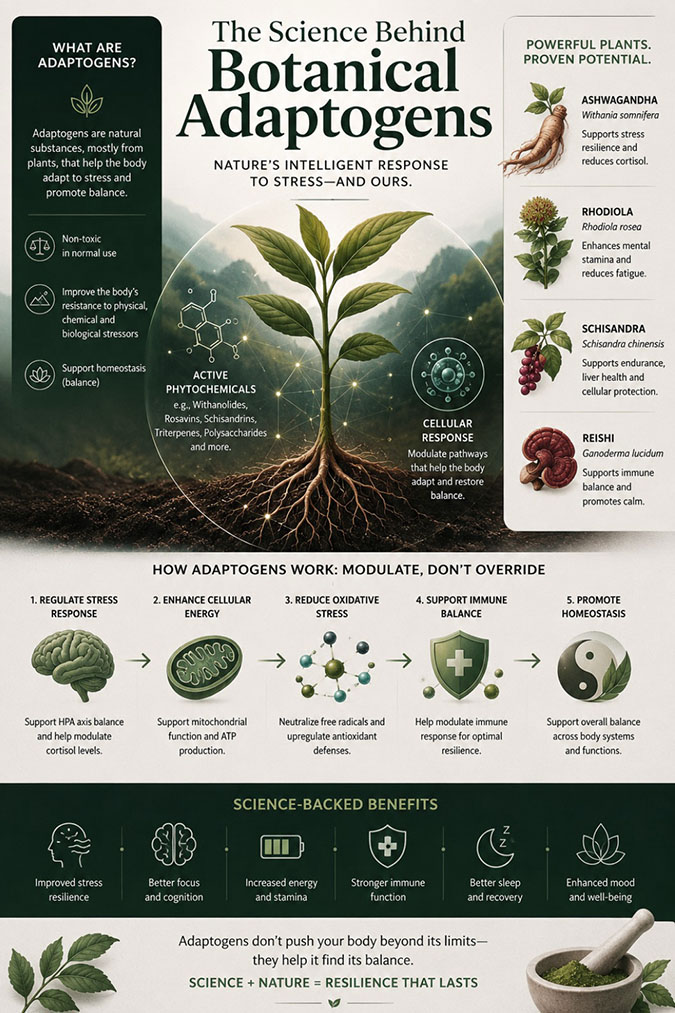
Adaptogens are natural substances, primarily herbs and roots, that help the body resist physical, emotional, and environmental stressors. The term “adaptogen” was first introduced in the mid-20th century by Russian scientist Dr. Nikolai Lazarev. To qualify as an adaptogen, a plant must meet three primary criteria:
- It must help the body cope with stress.
- It must support overall balance without overstimulating or sedating the body.
- It must be non-toxic when used appropriately.
Unlike stimulants such as caffeine, adaptogens work by regulating physiological processes rather than forcing a temporary energy boost. Their role is to support homeostasis—the body’s natural state of equilibrium.
Common botanical adaptogens include:
- Ashwagandha
- Rhodiola rosea
- Holy basil
- Ginseng
- Schisandra berry
- Maca root
- Eleuthero
- Licorice root
Each adaptogen contains unique bioactive compounds that influence hormones, neurotransmitters, immune responses, and energy production.
The Stress Response System Explained
To understand how adaptogens work, it is important to understand the body’s stress response system.
When a person experiences stress, the hypothalamic-pituitary-adrenal (HPA) axis becomes activated. This system triggers the release of stress hormones such as cortisol and adrenaline. In short bursts, this response is beneficial because it prepares the body to react quickly in dangerous situations.
However, chronic stress can keep cortisol levels elevated for long periods. This can contribute to:
- Fatigue
- Anxiety
- Poor concentration
- Brain fog
- Sleep disturbances
- Weakened immunity
- Digestive issues
- Mood imbalance
Over time, excessive stress hormones can disrupt neurological and hormonal balance, leading to both mental and physical exhaustion.
Adaptogens are believed to regulate the HPA axis and reduce the harmful effects of prolonged stress exposure.
How Adaptogens Influence Cortisol Levels
One of the most studied effects of adaptogens is their impact on cortisol regulation.
Cortisol is often called the “stress hormone,” but it also plays a vital role in metabolism, immune function, and energy regulation. Problems occur when cortisol remains chronically elevated.
Research suggests that certain adaptogenic herbs help normalize cortisol production rather than simply suppressing it. This balancing effect may explain why adaptogens can promote calmness without causing drowsiness.
For example, ashwagandha contains compounds known as withanolides, which may reduce cortisol levels and support relaxation. Several clinical studies have shown improvements in stress resilience, sleep quality, and anxiety symptoms among individuals taking standardized ashwagandha extracts.
Similarly, Rhodiola rosea has demonstrated potential for reducing mental fatigue and improving stress tolerance by influencing cortisol release and neurotransmitter activity.
The Connection Between Adaptogens and Mental Clarity
Mental clarity refers to the ability to think clearly, focus effectively, and maintain cognitive performance without excessive mental fatigue. Chronic stress often interferes with these functions because elevated cortisol can impair memory, concentration, and decision-making.
Adaptogens may support mental clarity through several biological pathways.
1. Supporting Neurotransmitter Balance
Certain adaptogens influence neurotransmitters such as dopamine, serotonin, and norepinephrine. These chemical messengers play essential roles in mood regulation, motivation, alertness, and focus.
Rhodiola rosea, for instance, may enhance dopamine signaling, which can improve mental performance and motivation during stressful conditions.
Holy basil has also been studied for its calming effects on the nervous system while maintaining cognitive alertness.
2. Reducing Oxidative Stress
The brain is highly vulnerable to oxidative stress caused by free radicals. Chronic stress and poor lifestyle habits can accelerate oxidative damage, potentially contributing to mental fatigue and cognitive decline.
Many adaptogenic herbs contain powerful antioxidants that help protect brain cells from oxidative injury. Schisandra berry and ginseng are particularly rich in antioxidant compounds that support cellular health.
3. Enhancing Energy Production
Adaptogens may improve mitochondrial function, which is essential for energy production within cells. Better cellular energy can lead to improved stamina, concentration, and reduced fatigue.
Unlike synthetic stimulants, adaptogens generally support sustained energy without producing severe crashes or jitteriness.
Scientific Research on Popular Adaptogens
Ashwagandha
Ashwagandha is one of the most researched adaptogenic herbs in modern science. Traditionally used in Ayurvedic medicine, it is known for its calming and restorative effects.
Studies suggest that ashwagandha may:
- Lower cortisol levels
- Reduce perceived stress
- Improve sleep quality
- Support cognitive function
- Enhance resilience to anxiety
Researchers believe these effects are linked to its anti-inflammatory and neuroprotective properties.
Rhodiola Rosea
Native to cold mountainous regions, Rhodiola rosea has long been used to combat fatigue and improve endurance.
Scientific investigations indicate that Rhodiola may:
- Improve mental performance under stress
- Reduce burnout symptoms
- Enhance mood
- Support physical stamina
- Reduce stress-related fatigue
Its active compounds, rosavins and salidrosides, are thought to influence neurotransmitters and cellular stress responses.
Panax Ginseng
Panax ginseng is widely recognized for its energizing and cognitive-supporting effects.
Research suggests that ginseng may help:
- Improve concentration
- Support memory
- Enhance physical endurance
- Reduce mental fatigue
- Strengthen immune function
Ginsenosides, the primary active compounds in ginseng, appear to affect inflammatory pathways and brain signaling systems.
Holy Basil
Also known as tulsi, holy basil has been used in traditional Indian medicine for centuries.
Modern studies suggest holy basil may:
- Reduce stress symptoms
- Support emotional balance
- Improve sleep quality
- Promote mental calmness
- Enhance cognitive flexibility
Its combination of antioxidant and anti-inflammatory compounds contributes to its adaptogenic potential.
Adaptogens and the Nervous System
Adaptogens may also support the autonomic nervous system, which controls involuntary body functions such as heart rate, breathing, and digestion.
Chronic stress often keeps the sympathetic nervous system—the “fight or flight” system—constantly activated. This can result in tension, irritability, and exhaustion.
Adaptogens may help shift the body toward parasympathetic dominance, commonly known as the “rest and digest” state. This promotes relaxation, recovery, and mental stability while still supporting alertness and productivity.
Are Adaptogens Scientifically Proven?
Although interest in adaptogens continues to grow, scientific research is still evolving. Many studies show promising results, but researchers emphasize the need for larger, long-term clinical trials.
Several factors influence research outcomes, including:
- Plant quality
- Dosage consistency
- Extraction methods
- Individual biology
- Lifestyle factors
Nonetheless, the current body of evidence suggests that many adaptogenic herbs possess genuine physiological effects that support stress adaptation and cognitive function.
Importantly, adaptogens are not miracle cures. Their effectiveness is often greatest when combined with healthy lifestyle habits such as proper sleep, balanced nutrition, physical activity, and stress management practices.
Safety and Considerations
Most adaptogens are considered safe when used appropriately, but they are not suitable for everyone.
Potential considerations include:
- Interactions with medications
- Hormonal sensitivities
- Pregnancy and breastfeeding concerns
- Autoimmune conditions
- Blood pressure effects
For example, some adaptogens may stimulate immune activity or alter blood sugar levels. Consulting a qualified healthcare professional is recommended before starting any herbal supplement regimen.
It is also essential to choose high-quality products from reputable manufacturers, as supplement quality can vary significantly.
The Future of Adaptogenic Research
As interest in natural wellness grows, adaptogens are becoming a major focus of scientific and pharmaceutical research. Researchers are exploring how botanical compounds interact with stress pathways, inflammation, immunity, and cognitive health at the molecular level.
Emerging areas of study include:
- Adaptogens and neuroprotection
- Stress resilience in aging populations
- Cognitive performance enhancement
- Gut-brain interactions
- Immune system modulation
Advances in herbal pharmacology and biotechnology may lead to more targeted adaptogenic therapies in the future.
Conclusion
Botanical adaptogens represent a fascinating intersection between ancient herbal traditions and modern scientific research. By supporting the body’s stress response systems, regulating cortisol, protecting brain function, and promoting mental resilience, these natural compounds offer promising benefits for stress relief and mental clarity.
While adaptogens are not a replacement for healthy living, they may serve as valuable tools in managing the pressures of modern life. As science continues to uncover the mechanisms behind these powerful plants, adaptogens are likely to remain an important part of holistic wellness and cognitive health strategies for years to come.