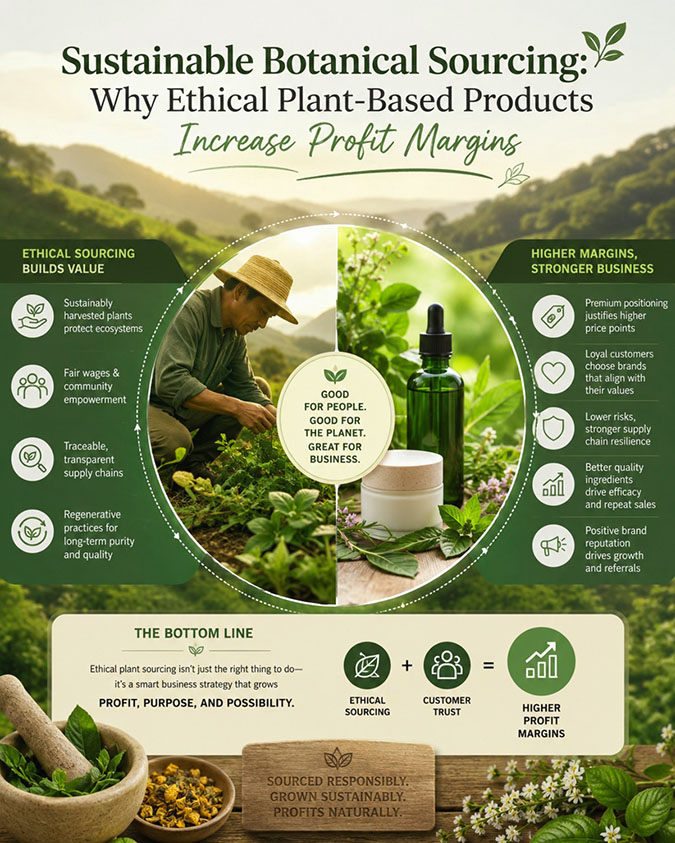
Sustainable Botanical Sourcing: Why Ethical Plant-Based Products Increase Profit Margins
In today’s marketplace, consumers are paying closer attention to where products come from, how they are produced, and whether businesses operate responsibly. This shift in consumer behavior has transformed sustainability from a niche concern into a major business strategy. For companies operating in the plant-based sector, ethical sourcing is no longer merely an environmental initiative—it has become a powerful driver of profitability.
Sustainable botanical sourcing refers to the responsible procurement of plant-derived ingredients while protecting ecosystems, supporting farming communities, and ensuring long-term resource availability. Businesses that embrace ethical sourcing practices often discover that doing the right thing can also lead to stronger financial performance. From increased customer loyalty to improved supply chain resilience, ethical plant-based products can significantly increase profit margins.
Understanding Sustainable Botanical Sourcing
Botanical ingredients are found in countless industries, including cosmetics, pharmaceuticals, food and beverages, dietary supplements, and personal care products. Ingredients such as aloe vera, turmeric, lavender, chamomile, moringa, and essential oils often originate from regions where local communities depend heavily on natural resources for their livelihoods.
Sustainable botanical sourcing involves several principles:
- Harvesting plants without depleting natural populations.
- Protecting biodiversity and ecosystems.
- Ensuring fair compensation for growers and harvesters.
- Maintaining transparency throughout the supply chain.
- Promoting regenerative agricultural practices.
- Respecting indigenous knowledge and local communities.
These principles help ensure that businesses can continue accessing high-quality ingredients without compromising the environment or exploiting vulnerable populations.
The Rise of Conscious Consumers
Modern consumers are more informed than ever before. Through social media, documentaries, and online reviews, buyers can quickly investigate a company’s sourcing practices.
Many customers actively seek products that align with their values. They increasingly prioritize:
- Environmentally responsible production.
- Cruelty-free and plant-based ingredients.
- Fair treatment of workers.
- Transparent labeling.
- Sustainable packaging.
This growing awareness has created a market advantage for brands that can demonstrate authentic ethical commitments.
Consumers are often willing to pay premium prices for products they perceive as socially and environmentally responsible. This willingness directly contributes to higher profit margins. Rather than competing solely on price, ethical brands compete on trust, quality, and purpose.
Building Brand Loyalty Through Trust
Trust is one of the most valuable assets a business can possess. Ethical sourcing strengthens that trust by providing customers with confidence in their purchasing decisions.
When customers believe that a company genuinely cares about people and the planet, they are more likely to:
- Make repeat purchases.
- Recommend products to friends and family.
- Leave positive reviews.
- Defend the brand during public criticism.
- Remain loyal despite moderate price increases.
Acquiring new customers is often far more expensive than retaining existing ones. Therefore, customer loyalty generated through sustainable practices reduces marketing costs while increasing lifetime customer value.
This combination contributes directly to healthier profit margins.
Premium Pricing Opportunities
Ethically sourced botanical products frequently command higher prices than conventional alternatives.
Consumers often associate sustainability with superior quality. Products featuring responsibly harvested ingredients, fair-trade certifications, or regenerative farming practices may justify premium positioning in the marketplace.
Examples include:
- Organic herbal teas.
- Sustainably sourced essential oils.
- Fair-trade botanical skincare products.
- Plant-based nutritional supplements.
- Eco-conscious cosmetic formulations.
Premium pricing does not merely increase revenue; it can improve profitability when consumers perceive the additional cost as reflecting genuine value.
The key is authenticity. Customers quickly recognize superficial sustainability claims. Businesses that back their messaging with measurable action are more likely to succeed.
Reducing Supply Chain Risks
One overlooked financial benefit of sustainable sourcing is risk management.
Unsustainable harvesting practices can lead to:
- Ingredient shortages.
- Environmental degradation.
- Government restrictions.
- Community conflicts.
- Increased raw material costs.
Overharvesting medicinal plants, for example, may threaten future availability and force businesses to seek alternative ingredients at higher prices.
Ethical sourcing strategies help prevent these disruptions by promoting long-term resource stewardship. Companies that invest in regenerative agriculture and community partnerships create more stable supply chains capable of withstanding environmental and economic challenges.
Supply chain resilience translates into fewer unexpected expenses and greater predictability in production planning.
Improving Product Quality
Sustainability and quality often go hand in hand.
Farmers engaged in responsible cultivation methods typically focus on soil health, biodiversity, and careful harvesting techniques. These practices can improve the consistency and potency of botanical ingredients.
Higher-quality ingredients may result in:
- Better product performance.
- Increased customer satisfaction.
- Lower defect rates.
- Reduced waste.
- Fewer product recalls.
For businesses, maintaining superior quality supports premium branding and strengthens customer confidence.
Instead of viewing sustainability as an added expense, companies can recognize it as an investment in excellence.
Enhancing Investor Appeal
Environmental, Social, and Governance (ESG) considerations increasingly influence investment decisions.
Investors are paying closer attention to how companies manage environmental risks, labor practices, and supply chain ethics. Businesses with strong sustainability programs often appear more resilient and forward-thinking.
Ethical sourcing initiatives can improve a company’s attractiveness to:
- Impact investors.
- Institutional investors.
- Sustainability-focused funds.
- Strategic business partners.
Access to capital may become easier and potentially more affordable when businesses demonstrate responsible operational practices.
This financial flexibility supports future growth and innovation.
Supporting Farming Communities
Ethical botanical sourcing extends beyond environmental protection. It also addresses social equity.
Many botanical ingredients originate in rural communities where economic opportunities may be limited. Fair purchasing agreements and long-term partnerships can improve livelihoods by providing:
- Stable income.
- Skills training.
- Educational opportunities.
- Healthcare access.
- Community development projects.
When farmers receive fair compensation, they are better equipped to maintain high-quality production standards.
Strong supplier relationships also reduce turnover and strengthen supply chain reliability.
Businesses benefit from dependable partnerships, while communities gain opportunities for economic advancement.
Meeting Regulatory Expectations
Governments around the world are introducing stricter regulations regarding environmental impact, human rights, and supply chain transparency.
Companies that proactively adopt ethical sourcing standards are often better prepared to comply with evolving legal requirements.
Early adoption can reduce future compliance costs and minimize exposure to legal risks.
Organizations that delay implementing responsible practices may eventually face:
- Regulatory penalties.
- Product restrictions.
- Costly operational adjustments.
- Reputational damage.
Proactive sustainability planning helps businesses remain agile in an increasingly regulated marketplace.
The Danger of Greenwashing
While sustainability offers substantial business benefits, misleading claims can quickly undermine consumer trust.
Greenwashing occurs when companies exaggerate or falsely represent their environmental achievements.
Examples include:
- Vague claims without evidence.
- Misleading labels.
- Selective disclosure of information.
- Highlighting minor initiatives while ignoring major impacts.
Consumers and regulators are becoming more adept at identifying these tactics.
To avoid greenwashing, companies should prioritize transparency by:
- Publishing sustainability reports.
- Obtaining credible certifications.
- Sharing sourcing information.
- Setting measurable goals.
- Acknowledging areas requiring improvement.
Authenticity remains essential to long-term success.
Practical Steps Toward Ethical Botanical Sourcing
Businesses interested in improving their sourcing practices can begin with manageable actions.
These include:
- Mapping the entire supply chain.
- Conducting supplier assessments.
- Prioritizing traceability.
- Partnering with certified producers.
- Investing in regenerative agriculture.
- Establishing fair compensation agreements.
- Monitoring environmental impacts.
- Communicating progress transparently.
Sustainability is a continuous journey rather than a one-time achievement.
Incremental improvements can generate meaningful results over time.
Conclusion
Sustainable botanical sourcing represents far more than corporate responsibility. It is a strategic business approach capable of enhancing profitability while supporting environmental stewardship and social well-being.
Ethical plant-based products resonate with consumers seeking transparency, quality, and purpose. They foster stronger customer loyalty, justify premium pricing, reduce supply chain risks, improve product consistency, attract investors, and prepare businesses for evolving regulations.
As demand for plant-based products continues to grow, companies that embrace ethical sourcing practices will likely gain a competitive advantage in increasingly crowded markets.
Ultimately, the businesses that thrive in the future may not be those that extract the most from nature, but those that understand how to work in partnership with it. By valuing sustainability as a source of innovation and resilience, organizations can create lasting benefits for customers, communities, ecosystems, and shareholders alike.
Ethical sourcing is not simply an expense to be managed. It is an investment in trust, longevity, and sustainable profit growth.